
Trade negotiators are reviving a proposal that would see Canadian steel and aluminum exports subject to a quota system in return for lower U.S. levies on the metals, as the clock ticks down on President Donald Trump’s next round of tariffs.
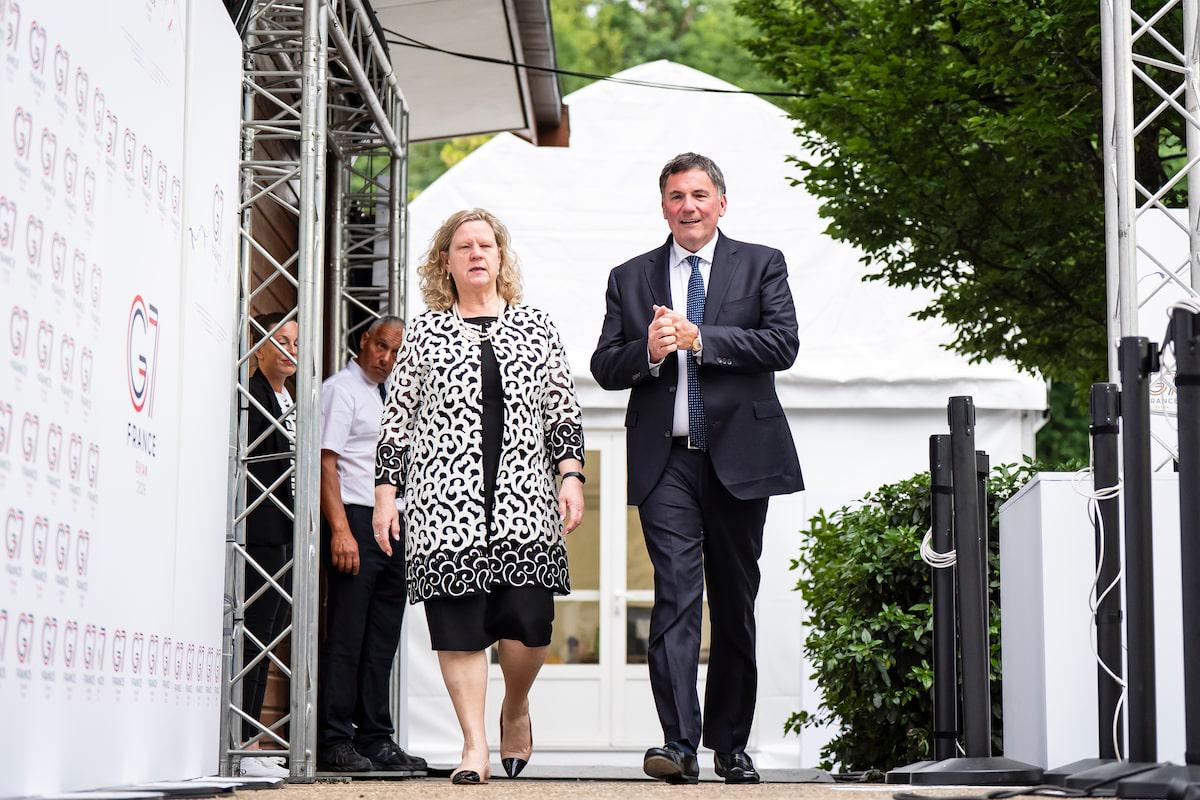
Intergovernmental Affairs Minister Dominic LeBlanc and Janice Charette, Canada’s chief negotiator, jetted to Washington on Tuesday for the second time in as many weeks as the pressure ramps up to make a breakthrough in stalled trade talks.
Their schedule this week includes meeting with U.S. industry groups that support the United States-Mexico-Canada Agreement, as well as sitting down with senators, one Canadian official told The Globe and Mail.
It was unclear whether Mr. LeBlanc would meet with U.S. Trade Representative Jamieson Greer, Commerce Secretary Howard Lutnick or any other members of the Trump administration.
One key to the discussions, according to four industry and two government sources, is a plan under which Canadian metals shipments to the U.S. would be limited in exchange for Mr. Trump reducing his 50-per-cent tariffs on them, similar to a proposal on the table last fall.
The Globe is not identifying the sources because they were not authorized to reveal details of the top-secret negotiations.
The U.S. has also enumerated some two dozen other demands, including more access to Canada’s protected dairy market, an end to provincial governments retaliating against Mr. Trump’s tariffs by banning U.S. liquor and the scrapping of the Online Streaming Act.
Canada has made a string of pre-emptive concessions to Mr. Trump – such as killing a planned digital services tax and rolling back a Canadian content levy on streaming companies – but trade talks have remained at an impasse.
Ottawa has resisted striking a punitive trade deal with Washington similar to those agreed to last year by Britain and Japan without some tariff relief. The White House, meanwhile, has refused to ease the trade war without more concessions, including stopping any retaliation against the tariffs.
But Mr. Trump’s plan, unveiled last month, to hit an additional US$20-billion worth of Canadian exports with 50-per-cent tariffs starting Aug. 19 lit a fire under Ottawa, according to two Canadian government sources and one U.S. industry source.
The new tariffs would be implemented under Section 338 of the Smoot-Hawley Tariff Act of 1930. While they would affect only about 5 per cent of Canadian exports − a range of goods from alcohol to dairy and electronic equipment − they would hit some industries particularly hard, likely a calculated move to get those sectors to put pressure on Ottawa for a deal. The tariffs would be felt most acutely in Ontario, Quebec and British Columbia − while mostly sparing Alberta and Saskatchewan, the two provinces not boycotting U.S. alcohol.
Now the two sides have gone back to a proposal they were discussing last October, when Mr. Trump abruptly ended talks over an Ontario government anti-tariff ad.
Under the framework, Canadian steel and aluminum would be subject to tariff rate quotas, or TRQs, the sources said. This would mean that only a certain amount of the Canadian metals could be exported to the U.S. before an exorbitant tariff would take effect.
Two U.S. industry sources said negotiators are still haggling over what the quotas should be and, in the case of steel, whether there should also be a lower tariff on steel sold below the quota.
In exchange, Canada would see Mr. Trump’s metals tariffs, imposed under Section 232 of the Trade Expansion Act of 1962, reduced for exports under the quota limit. Such an agreement could help achieve Canada’s central negotiating goal of easing the pain for key industrial sectors while breaking the logjam on other trade issues.
The Globe reported last fall that the proposed deal on steel would have seen a quota based on a historical level of metal shipments to the United States. Inside the quota, steel would have faced a tariff in the range of 10 to 15 per cent; outside the quota, steel shipments would have faced tariffs in the 25-to-50-per-cent range.
Two Canadian industry sources said that, in addition to the formal negotiating sessions Mr. LeBlanc and Ms. Charette have been holding with Mr. Greer, Prime Minister Mark Carney and Mr. Trump have been talking directly.
Despite the more intensive trade talks, major hurdles remain. One Canadian industry and one Canadian government source said the other major economic sector hammered by Mr. Trump’s Section 232 tariffs, autos, has not been the subject of detailed negotiations.
In congressional testimony last month, Mr. Greer said discussions about rules of origin and other structural changes to the U.S.-Mexico-Canada Agreement, potentially including the auto sector, would likely continue into 2027. Canadian-made autos are subject to a 25-per-cent tariff.
Without Mr. Trump rolling back his auto tariffs on Canada, it is highly unlikely Ottawa would remove its countertariffs, another of the Trump administration’s demands.
In the meantime, Mr. Greer said he hoped to reach “interim arrangements” with Canada and Mexico before the end of the year but did not specify what these more limited deals would contain.
The U.S. has also regularly moved the goalposts during talks. After sending Canada a letter enumerating its demands in June, Mr. Greer last week handed Mr. LeBlanc a list of 10 more, said one Canadian government, one Canadian industry and one U.S. industry source.
Rallying support for free trade among business groups and legislators has long been a favoured Canadian tactic in dealing with Mr. Trump.
But it has not appeared to work as well during the President’s second term as it did during his first. The White House has become more aggressive with its protectionist trade agenda and more traditionally free-trade-supporting Republicans have been sidelined within the party.
Steel and aluminum have been at the heart of Canada-U.S. trade tensions since the first Trump administration, when the President put a 25-per-cent tariff on both metals and left it in place for a year during negotiations over the North American free-trade agreement.
The steeper 50-per-cent tariffs have severely squeezed exports of both metals, with shipment volumes heading to the U.S. falling by half in the months after the introduction of tariffs last spring. Aluminum exports have recovered somewhat since then but remain well below 2024 levels; steel exports remain roughly half of what they were in 2024.
The metal tariffs have also bitten much harder than during the first Trump presidency because they have been applied to hundreds of “derivative” products: manufactured goods that contain metal. That has hit Canadian manufacturers across a broad range of industries.
Ottawa has a strong case to make for tariff relief on aluminum, as the U.S. produces only a fraction of what it consumes and imports the rest, with Canada being by far the largest source. The case is somewhat harder to make for steel: The U.S. has more production capacity, and the domestic steel lobby has significant political clout.
The Section 232 tariffs on steel and aluminum and their derivative products, which apply to every country, are aimed at boosting domestic production − and reducing the amount of cheap steel produced in China and other Asian countries making its way into the U.S.
Canada has taken a number of steps over the past year to protect its own domestic steel industry from low-cost imports, in effect aligning with Mr. Trump’s protectionism.
Posted by IHateTrains123
1 Comment
If you remove context that title looks like it could come straight out of 1300 BC Bronze Age diplomacy
“Hittite Trade negotiators revive proposed tin and copper exports quote in return for lower Egyptian 21st dynasty tariffs”