
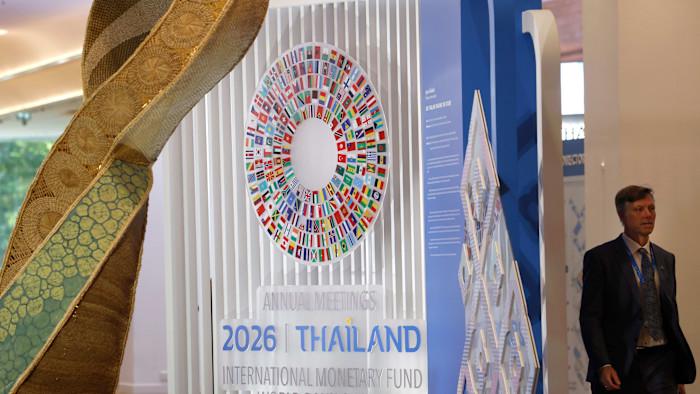
At its annual meeting, the fund calls for ‘urgent’ action to rebuild public finances
The world’s leading economies need to take “urgent” action to rebuild public finances, the IMF has warned, as it published forecasts showing leading economies are heading this year for their biggest budget deficits since the Covid-19 collapse.
In its World Economic Outlook, the IMF predicted on Tuesday that net borrowing by advanced economies would reach 5.2 per cent of GDP this year, the highest since 2021, when the world was in the grip of pandemic lockdowns.
Deficits in China and the US will hit or exceed 8 per cent of GDP in 2026, according to IMF forecasts, which cover a wider range of borrowing than some national gauges.
The forecasts represent a deterioration since the IMF’s report in April and follow months of turmoil in global debt markets. Yields have pushed higher as markets grapple with concerns over mounting public debt, inflation and aggressive AI funding.
“The global economy has been resilient but that resilience is reaching its limits,” said IMF chief economist Silvana Tenreyro at a press conference.
The outlook found that while the global economy has weathered the oil shock, partly thanks to the AI-driven investment boom, sovereign debt risks are rising as global public debt heads towards 100 per cent of GDP later this decade.
“A renewed focus on rebuilding fiscal space is urgent, given elevated debt, higher borrowing costs, multiplying demands on public budgets and heightened uncertainty,” said the IMF.
Government borrowing costs have soared to multi-decade highs, as high energy prices and economic growth have prompted central banks to abandon plans to lower interest rates. Central banks in the US, the Eurozone and Japan are among those that have lifted interest rates this year.
“With long-term government borrowing costs on the rise in major advanced economies, elevated public debt and large refinancing needs leave sovereigns increasingly exposed to such abrupt changes in financial conditions,” the IMF warned.
The sell-off worsened in September, increasing pressure on budgets by pushing interest costs higher. In the US, general government net borrowing is on track to hit 8.5 per cent of GDP this year, according to the IMF forecast, up from 7.1 per cent in 2025 and compared with 5.8 per cent on the eve of the pandemic.
The IMF’s measure, which includes US state and local government borrowing alongside federal spending, is significantly higher than other estimates. The US Congress’s independent fiscal watchdog, the Congressional Budget Office, projected in February that the federal deficit would hit 5.8 per cent of GDP this year. The Committee for a Responsible Federal Budget, a think-tank, estimated it would come in at 6.2 per cent.
The IMF added that with fiscal costs rising and electoral pressures intensifying in many countries, “central banks may face renewed calls to accommodate higher public borrowing or tolerate inflation above target”.
Growth will remain relatively resilient this year, said the IMF, which marginally upgraded its global GDP growth forecast by 0.1 point to 3.1 per cent this year. The world economy would expand by 3.4 per cent in 2027, it predicted.
Part of the explanation is the AI boom. “But the AI momentum is unlikely to lift all economies equally,” the IMF warned.
While aggregate growth appeared stable, it was increasingly concentrated in a smaller number of economies, the IMF said. In April, 54 economies accounted for 95 per cent of global growth. Since then, the figure has dropped to just 32, as growth forecast downgrades have proliferated.
“The global economy is not simply slowing or accelerating; rather, growth is being reallocated across countries according to their exposure to the war-induced supply shock and AI-related demand strength,” said the report.
The US continues to drive the global economy, with growth forecast to remain steady at 2.3 per cent this year and next. Germany received a sharp upgrade of 0.6 percentage points amid rising investment in infrastructure and defence, bringing forecast growth to 1.3 per cent this year and 1.1 per cent in 2027.
China is set to slow to 4.5 per cent GDP growth this year from 5 per cent previously and then decelerate further to 4 per cent in 2027. By contrast, India stands out as a bright spot with growth of 7 per cent this year and next.
The IMF’s Global Financial Stability Report, released later on Tuesday, highlighted the risk of deteriorating fiscal balances, pointing to the combination of prolonged wars, cyber attacks and extreme weather events worsening the global energy shock.
The report focused on three risks, including a correction in AI-related asset prices and growing systemic threats from cyber attacks, that could become catalysts for an acute tightening of financial conditions and market turmoil.
“Resurgent inflation or fiscal concerns could trigger a sharp rise in sovereign bond yields and spark broader market turmoil given the foundational importance of sovereign bonds,” the report said.
Further reading:
Asia warned over zombie companies – FT
China’s growing debt burden limits space for economic stimulus "
IMF upgrades outlook for UK as AI drives growth spurt "
Investors brave US Treasury rout to lock in highest yields in decades "
Posted by IHateTrains123