
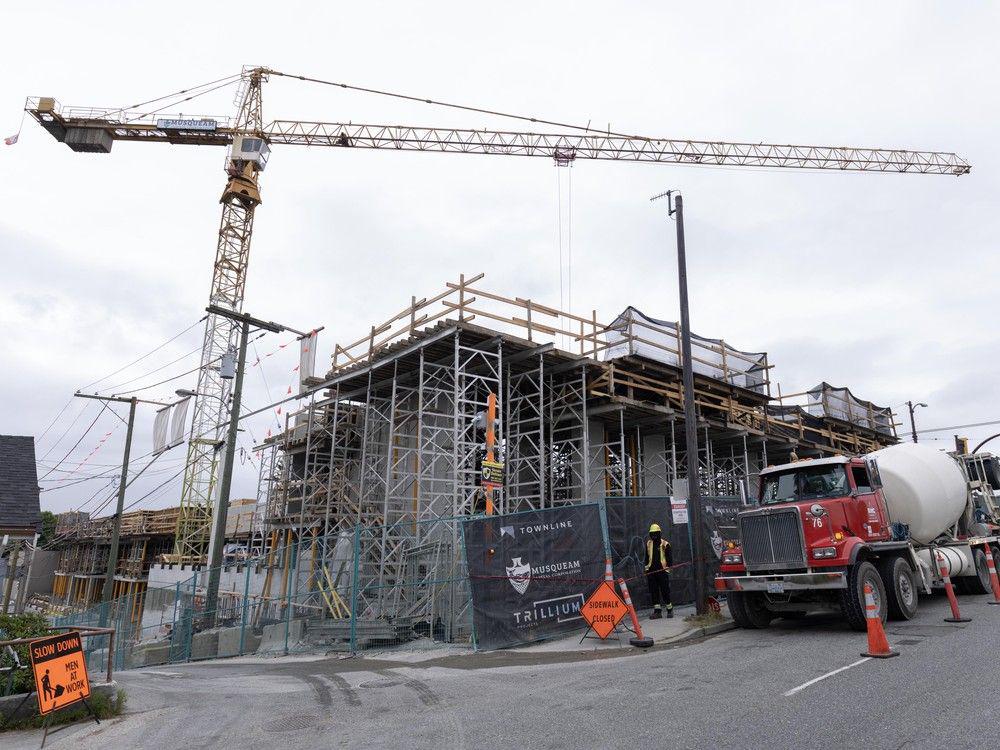
B.C. cuts Metro Vancouver developers a break from soaring fees, backstopped by $250 million in federal cash
Posted by IHateTrains123
B.C. cuts Metro Vancouver developers a break from soaring fees, backstopped by $250 million in federal cash
Posted by IHateTrains123
1 Comment
“Having sat down with both not-for-profit builders and private builders, and gone through their pro-formas, I can say that this will be the difference between housing happening, and it not happening,” said B.C. Housing Minister Ravi Kahlon.
>The B.C. government is lending a hand to the ailing homebuilding industry in the province’s most populous region, effectively slashing development charges for many projects already in the pipeline.
>The province confirmed to Postmedia News that for residential projects in Metro Vancouver initiated before March 2024, fees to pay for growth-related infrastructure, such as water, wastewater and parks, will be reduced.
>Developers of these “in-stream” projects will be able to pay development cost charges under the old fee structure, instead of the new one that more than tripled this year.
>Metro’s funding shortfall from the reduced development charges will be backstopped by $250 million from the federal government.
>The move is being welcomed by some of B.C.’s biggest development companies. The industry had lobbied for some kind of relief since the higher fees were unveiled in 2023, warning the increases would kill previously viable projects.
>Rick Ilich, CEO of Townline, a major Vancouver-area developer of strata and rental housing, called the in-stream protections a “bold move” that will protect thousands of jobs in Metro and provides a measure of certainty in an uncertain time.
>The change is unlikely to make a major difference for many Vancouver-area condo projects considering the state of the overall market, Ilich said, but it could help some rental projects get “unstuck.”
>[…]
>While the province, the federal government and many municipal governments are aligned on the goal of dramatically boosting housing supply, several factors — including increasing costs of all kinds, a tight labour market, a U.S. trade war and related uncertainty — are converging to create a challenging market environment for residential projects to proceed. Some of B.C.’s largest development and real estate companies, including Wesgroup and Rennie, have recently laid of significant portions of their staff.
>Metro’s new fee structure was set in 2023, representing increases as high as 255 per cent over three years. It was implemented over the objections of developers and, in a rare case, Canada’s then-housing minister, who cautioned the increases were so dramatic that they would render several planned developments unviable.
!ping Can-BC&YIMBY