> The “presumption of regularity” is a judicially created doctrine with a long and contested history. The doctrine affords the executive branch a distinctive advantage not enjoyed by private litigants.[1] It generally instructs courts to presume, unless there is clear evidence to the contrary, that executive officials have “properly discharged their official duties” and that government agencies have acted with procedural regularity and with bona fide, non-pretextual reasons. In practice, the presumption can preclude discovery, limit review of the facts, and truncate cases. It can constrict (or even end) civil suits challenging government action and curb criminal defendants’ ability to claim vindictive or selective prosecution, and more.
> Over the decades, the scope and weight of the presumption has fluctuated. In the face of extraordinary executive misconduct or malfeasance, courts may choose (explicitly or implicitly) to narrow its scope, reduce its weight, or even potentially deem the presumption more generally forfeited, as the Trump administration is beginning to learn. Indeed, Judge Paul L. Friedman cautioned in an August 2025 opinion:
> > Generations of presidential administrations and public officials have validated this underlying premise of the presumption of regularity: their actions writ large have raised little question that they act ‘in obedience to [their] duty.’ Over the last six months, however, courts have seen instance after instance of departures from this tradition. … **In just six months, the President of the United States may have forfeited the right to such a presumption of regularity.** [emphasis added]
> The Supreme Court itself showed the limits of the presumption during the first Trump administration upon learning that the Commerce Department had “contrived” a false rationale for reinstating the citizenship question in the national census. In Department of Commerce v. New York, Chief Justice John Roberts wrote, “[W]e cannot ignore the disconnect between the decision made and the explanation given. Our review is deferential, but we are ‘not required to exhibit a naiveté from which ordinary citizens are free.’” That move was to the chagrin of Justice Clarence Thomas, who argued that the majority had given “lipservice” to the principle that “courts reviewing agency action owe the Executive a ‘presumption of regularity.’”
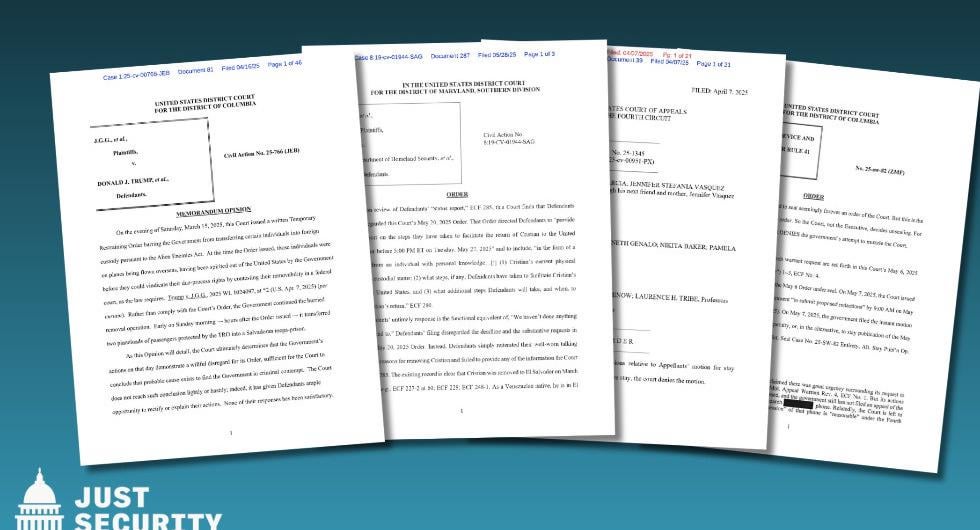
> We document three categories of executive branch conduct since Jan. 20, 2025 that, in Judge Friedman’s words, showed to courts “instance after instance of departures from this tradition” of public officials acting “in obedience to [their] duty.” The three categories are:
> 1. Courts’ concerns over noncompliance with judicial orders (over 15 cases)
> 2. Courts’ distrust of government information and representations (over 35 cases)
> 3. Courts’ findings of “arbitrary and capricious” administrative action (over 50 cases)
> On this record, we believe more federal judges will rightfully conclude that the administration has forfeited the full protections of the presumption.
> Indeed, Judge Friedman is not alone in his observations. Denying a government bid to indefinitely seal a judicial order, Magistrate Judge Zia M. Faruqui recently responded to the government’s request for deference in sharp terms. Recounting a list of concerns across different cases in the federal courts and aberrant behavior by the Justice Department, the judge wrote: “Blind deference to the government? That is no longer a thing. Trust that had been earned over generations has been lost in weeks. … These norms being broken must have consequences. High deference is out; trust, but verify is in” (emphasis added). Other judges have raised similar concerns about the viability of the presumption in the cases before them. At a July hearing in the Abrego Garcia case, Judge Paula Xinis told government counsel, “You have taken the presumption of regularity and you’ve destroyed it in my view.” In litigation over the administration’s efforts to dismantle the Consumer Financial Protection Bureau, Judge Amy Berman Jackson wrote, “the Court is left with little confidence that the defense can be trusted to tell the truth about anything.” Concerning an executive order against a law firm, Judge Beryl A. Howell wrote that the government’s noncompliance with a temporary restraining order “raised some concern about the general presumption by courts ‘that executive officials will act in good faith.’” And when reviewing the rescission of government funds to small businesses and nonprofits, Judge Loren L. AliKhan wrote, “Defendants’ plea for a presumption of good faith rings hollow when their own actions contradict their representations.”

1 Comment
> The “presumption of regularity” is a judicially created doctrine with a long and contested history. The doctrine affords the executive branch a distinctive advantage not enjoyed by private litigants.[1] It generally instructs courts to presume, unless there is clear evidence to the contrary, that executive officials have “properly discharged their official duties” and that government agencies have acted with procedural regularity and with bona fide, non-pretextual reasons. In practice, the presumption can preclude discovery, limit review of the facts, and truncate cases. It can constrict (or even end) civil suits challenging government action and curb criminal defendants’ ability to claim vindictive or selective prosecution, and more.
> Over the decades, the scope and weight of the presumption has fluctuated. In the face of extraordinary executive misconduct or malfeasance, courts may choose (explicitly or implicitly) to narrow its scope, reduce its weight, or even potentially deem the presumption more generally forfeited, as the Trump administration is beginning to learn. Indeed, Judge Paul L. Friedman cautioned in an August 2025 opinion:
> > Generations of presidential administrations and public officials have validated this underlying premise of the presumption of regularity: their actions writ large have raised little question that they act ‘in obedience to [their] duty.’ Over the last six months, however, courts have seen instance after instance of departures from this tradition. … **In just six months, the President of the United States may have forfeited the right to such a presumption of regularity.** [emphasis added]
> The Supreme Court itself showed the limits of the presumption during the first Trump administration upon learning that the Commerce Department had “contrived” a false rationale for reinstating the citizenship question in the national census. In Department of Commerce v. New York, Chief Justice John Roberts wrote, “[W]e cannot ignore the disconnect between the decision made and the explanation given. Our review is deferential, but we are ‘not required to exhibit a naiveté from which ordinary citizens are free.’” That move was to the chagrin of Justice Clarence Thomas, who argued that the majority had given “lipservice” to the principle that “courts reviewing agency action owe the Executive a ‘presumption of regularity.’”
> We document three categories of executive branch conduct since Jan. 20, 2025 that, in Judge Friedman’s words, showed to courts “instance after instance of departures from this tradition” of public officials acting “in obedience to [their] duty.” The three categories are:
> 1. Courts’ concerns over noncompliance with judicial orders (over 15 cases)
> 2. Courts’ distrust of government information and representations (over 35 cases)
> 3. Courts’ findings of “arbitrary and capricious” administrative action (over 50 cases)
> On this record, we believe more federal judges will rightfully conclude that the administration has forfeited the full protections of the presumption.
> Indeed, Judge Friedman is not alone in his observations. Denying a government bid to indefinitely seal a judicial order, Magistrate Judge Zia M. Faruqui recently responded to the government’s request for deference in sharp terms. Recounting a list of concerns across different cases in the federal courts and aberrant behavior by the Justice Department, the judge wrote: “Blind deference to the government? That is no longer a thing. Trust that had been earned over generations has been lost in weeks. … These norms being broken must have consequences. High deference is out; trust, but verify is in” (emphasis added). Other judges have raised similar concerns about the viability of the presumption in the cases before them. At a July hearing in the Abrego Garcia case, Judge Paula Xinis told government counsel, “You have taken the presumption of regularity and you’ve destroyed it in my view.” In litigation over the administration’s efforts to dismantle the Consumer Financial Protection Bureau, Judge Amy Berman Jackson wrote, “the Court is left with little confidence that the defense can be trusted to tell the truth about anything.” Concerning an executive order against a law firm, Judge Beryl A. Howell wrote that the government’s noncompliance with a temporary restraining order “raised some concern about the general presumption by courts ‘that executive officials will act in good faith.’” And when reviewing the rescission of government funds to small businesses and nonprofits, Judge Loren L. AliKhan wrote, “Defendants’ plea for a presumption of good faith rings hollow when their own actions contradict their representations.”
!ping LAW